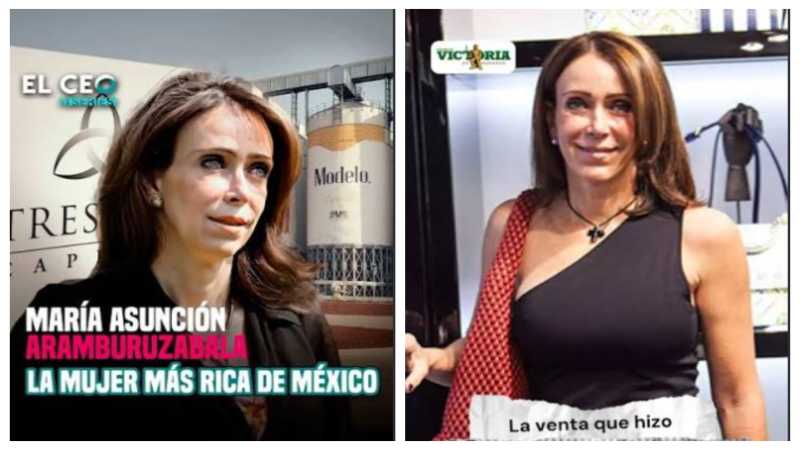
When people search for Maria Asuncion Aramburuzabala and Susan Wojcicki, they may be looking for information about two influential businesswomen, their professional achievements, and the connection between their lives. Both became prominent figures in industries where women have historically faced barriers to senior leadership, but their careers followed very different paths.
María Asunción Aramburuzabala is a Mexican businesswoman and investor known for her involvement with Grupo Modelo and her leadership in investment through Tresalia Capital. Susan Wojcicki was an American technology executive who helped shape Google’s development and later served as CEO of YouTube.
Their stories offer an interesting comparison between investment management and technology leadership. However, an important distinction must be made: there is no reliable public evidence establishing that the two women were relatives, business partners, or close professional collaborators. Their shared significance lies in their respective contributions to business, rather than a documented direct relationship.
This article explores their backgrounds, careers, achievements, personal lives, financial success, and lasting influence while separating verified information from assumptions.
Who Are María Asunción Aramburuzabala and Susan Wojcicki?
Although their names sometimes appear together in online searches, María Asunción Aramburuzabala and Susan Wojcicki built their reputations in different countries and industries.

María Asunción Aramburuzabala
Mexican businesswoman and investor
Aramburuzabala became a major figure in Mexican business through her family’s connection to Grupo Modelo. She subsequently expanded her professional interests through Tresalia Capital, with investments spanning multiple sectors, including real estate and technology.
Susan Wojcicki
American technology executive, 1968–2024
Wojcicki joined Google in 1999, contributed to its advertising business, and became CEO of YouTube in 2014. She stepped down in 2023 and died on August 9, 2024, at age 56, following a battle with lung cancer.
The key difference is how each woman developed her influence. Aramburuzabala’s career centers on business ownership, investment strategy, and capital management. Wojcicki’s career centered on building digital products, developing advertising systems, and leading a global video platform.
1. María Asunción Aramburuzabala: Early Life and Background

María Asunción Aramburuzabala Larregui was born on May 2, 1963, in Mexico City, Mexico. Her family had deep roots in the Mexican brewing industry, particularly through Grupo Modelo, the company associated with brands such as Corona.
Her grandfather, Félix Aramburuzabala, was among the founders of Grupo Modelo in 1925. The family connection provided an important starting point for understanding her later career, although her subsequent investment activities extended beyond the brewing business.
Growing up in a family connected to a major enterprise meant that business ownership and corporate responsibility were important elements of her background. However, inheriting an interest in a company and managing its future are two different challenges.
Her professional story became particularly significant after her father, Pablo Aramburuzabala, died in 1995. His death created a major transition for the family and its business interests. María Asunción became involved in protecting those interests while helping guide the family’s commercial future.
Education and Business Preparation
Aramburuzabala studied accounting at the Instituto Tecnológico Autónomo de México (ITAM), a Mexican university known for its economics, business, and social-science programs.
Accounting provides a useful foundation for understanding financial statements, company performance, costs, and investment decisions. Those skills are relevant to managing a complex business portfolio, although a degree alone does not explain the full development of a successful investor.
Her career demonstrates the importance of combining financial knowledge with strategic judgment, corporate governance, and the ability to assess opportunities across industries.
2. María Asunción Aramburuzabala’s Career and Business Achievements
Taking Responsibility for Grupo Modelo
After her father’s death in 1995, Aramburuzabala took on a more prominent role in the family business. This transition occurred during a consequential period because the family needed to preserve its ownership interests and make decisions about the future of a major brewing enterprise.
Grupo Modelo had an established position in the Mexican beer market and international recognition through products such as Corona. Managing interests in a business of this scale involves more than overseeing daily operations. It also requires evaluating ownership structures, partnerships, corporate strategy, and the long-term value of the company.
Aramburuzabala’s subsequent career illustrates how a family business stake can become the starting point for a much broader investment strategy.
Founding and Developing Tresalia Capital
One of the most important milestones in her professional life was the creation of Tresalia Capital in 1995, following her father’s death. The investment firm became a vehicle for managing and expanding the family’s financial interests.
Through Tresalia, Aramburuzabala pursued investments beyond traditional brewing. Her business interests have included technology, telecommunications, real estate, and other corporate investments.
This diversification matters because a business portfolio concentrated in one industry can be vulnerable to changes in consumer demand, regulation, competition, and economic conditions. Investing across different sectors can create new growth opportunities, although diversification does not eliminate financial risk.
Tresalia’s development also reflects a shift from relying primarily on a legacy business toward actively managing a wider collection of investments.
The Grupo Modelo Sale
A major turning point came when Grupo Modelo’s controlling interests were sold to Anheuser-Busch InBev, the global brewing company. The transaction was announced in 2012 and completed in 2013 after the relevant regulatory processes. The deal was valued at approximately $20.1 billion in cash for the outstanding shares covered by the acquisition.
The transaction transformed the ownership landscape of one of Mexico’s best-known companies. It also allowed the family’s wealth associated with the brewing business to be converted, in part, into financial resources that could support investments in other industries.
Aramburuzabala’s career did not end with the sale. Instead, her ongoing investment activities demonstrate how a major corporate transaction can become a foundation for a new phase of business development.
Expanding into Real Estate and Technology
Two notable businesses associated with Tresalia’s investment strategy are Abilia and KIO Networks.
- Abilia: A real estate development business involved in residential, commercial, and corporate projects.
- KIO Networks: A technology infrastructure and information technology services business associated with data centers and related digital infrastructure.
These investments illustrate the range of sectors in which Aramburuzabala has developed business interests. Real estate and technology infrastructure have different revenue models and operating requirements, so overseeing investments in both requires an understanding of distinct market conditions.
Her career therefore provides an example of how wealth generated or inherited through one industry can be redeployed into businesses with different long-term prospects.
Recognition in Business
Aramburuzabala has received public recognition for her work in Mexican business. In 2016, Forbes México reported that she received its Business Excellence Award during the publication’s Women of Power forum. The publication also described her involvement in the Grupo Modelo transaction and her investments through Tresalia Capital.
Her significance is not limited to the size of her family’s wealth. She has also played a role in managing major corporate interests, expanding a diversified portfolio, and maintaining a position in Mexico’s business community.
3. Susan Wojcicki: Early Life and Family Background

Susan Diane Wojcicki was born on July 5, 1968, in Santa Clara County, California, United States. She grew up in a family that valued education and intellectual curiosity. Her father, Stanley Wojcicki, was a physics professor at Stanford University, while her mother, Esther Wojcicki, became known for her work in education and journalism.
Her background helped place education and analytical thinking at the center of her early development. Unlike Aramburuzabala, whose professional story was closely connected to family business ownership, Wojcicki built her career through education, employment, and leadership in the technology sector.
She became one of the most recognizable women in Silicon Valley, particularly through her work at Google and YouTube.
Education and Academic Qualifications
Wojcicki studied history and literature at Harvard University, graduating in 1990. She later earned a master’s degree in economics from the University of California, Santa Cruz, and an MBA from the UCLA Anderson School of Management.
Her academic background combined the humanities with economics and business administration. This mix was relevant to a technology career that required both analytical thinking and an understanding of users, markets, and organizational strategy.
Her professional journey also demonstrates that a career in technology does not necessarily begin with a computer science degree. Business judgment, communication, commercial awareness, and the ability to learn new technical concepts can also be valuable in technology leadership.
4. Susan Wojcicki’s Career at Google
Joining Google in Its Early Years
Wojcicki joined Google in 1999 as one of its earliest employees. At the time, the company was still developing its business model and expanding its search technology. Her decision to join the young company placed her in a position to influence its growth during a formative period.
She worked in areas that helped turn Google’s search technology into a sustainable commercial business. As online search became more important to consumers and organizations, advertising provided a way for the company to generate revenue while offering widely used services.
Wojcicki became closely associated with the development of Google’s advertising business, including products such as AdSense and AdWords, now known as Google Ads.
Helping Develop Digital Advertising
Digital advertising changed how companies reached customers. Traditional advertising often depended on broad campaigns across television, radio, newspapers, and magazines. Online advertising introduced more measurable ways to reach audiences and assess campaign performance.
Google’s advertising products helped businesses connect their messages with people searching for information or visiting websites. Wojcicki’s work contributed to the development of this commercial model and helped establish her reputation as a significant technology executive.
This experience was important for her later leadership at YouTube. Digital video also relies on advertising, audience engagement, creator relationships, and the ability to balance commercial objectives with user experience.
Google’s Acquisition of YouTube
Google acquired YouTube in 2006 in a transaction valued at approximately $1.65 billion in Google stock. At that time, online video was developing rapidly, and YouTube had become a major destination for user-generated content.
Wojcicki was involved in Google’s broader video strategy and became a central executive in the development of YouTube after the acquisition.
The deal helped Google expand beyond conventional search and into online video. It also created opportunities to develop advertising, support creators, and build a platform where users could upload and watch content from around the world.
The acquisition is an important milestone in understanding Wojcicki’s career because it connected Google’s advertising expertise with the growing popularity of online video.
5. Susan Wojcicki as YouTube CEO

Wojcicki became CEO of YouTube in 2014. During her tenure, the platform continued to expand its international audience, creator ecosystem, advertising operations, and subscription offerings. She held the position until 2023.
Leading YouTube involved a range of responsibilities beyond increasing viewership. The company needed to support creators, maintain relationships with advertisers, improve its products, and respond to concerns about harmful content and the effects of platform recommendations.
Supporting Creators and Expanding the Platform
YouTube became an important platform for educators, entertainers, journalists, musicians, businesses, and independent creators. Many used it to reach audiences without relying exclusively on traditional media organizations.
Under Wojcicki’s leadership, creator monetization and the platform’s commercial ecosystem remained important priorities. Advertising revenue and paid subscriptions helped support the business, while creators gained opportunities to earn income through eligible platform programs.
However, those opportunities were not equally available to everyone. Creator income could vary widely depending on audience size, content category, location, advertising demand, and eligibility requirements.
The broader lesson is that digital platforms can create new economic opportunities while also concentrating substantial power in the companies that control distribution and monetization.
Managing Content, Safety, and Public Criticism
YouTube’s growth also brought difficult questions about misinformation, harmful material, copyright, and moderation. The platform needed to balance freedom of expression with safety requirements and legal responsibilities.
These challenges were not unique to Wojcicki or YouTube. They reflected a broader problem for large digital platforms: decisions about content rules and recommendations can influence public discussion, business opportunities, and the visibility of information.
Wojcicki’s tenure therefore involved both expansion and controversy. A balanced account of her career should recognize her contribution to YouTube’s growth while acknowledging the complicated responsibilities associated with operating a global content platform.
Stepping Down as CEO
In February 2023, Wojcicki announced that she would step down as YouTube CEO after nearly nine years in the role. She explained that she wanted to focus on her family, health, and personal projects. Neal Mohan succeeded her as CEO.
Her departure marked the end of a major chapter in her professional life. Nevertheless, her influence on Google’s early development, digital advertising, and YouTube’s evolution remained an important part of her legacy.
6. Susan Wojcicki’s Family and Personal Life
Wojcicki married Dennis Troper in 1998. The couple had five children. Her family life was an important part of her identity, and she publicly discussed the challenges of balancing professional leadership with parenthood.
She also became an advocate for policies that could help employees balance work and family responsibilities. Her public positions included support for parental leave and greater opportunities for women in technology.
These issues mattered because technology companies often operate in competitive environments where employees face pressure to deliver results while managing personal responsibilities. Workplace policies can influence employee retention, career progression, and the ability of parents to remain in demanding professional roles.
Wojcicki’s experiences as an executive and parent informed her public advocacy, although the impact of any individual policy depends on how organizations implement it.
Susan Wojcicki’s Death and Legacy
Susan Wojcicki died on August 9, 2024, at the age of 56, after living with non-small cell lung cancer for approximately two years. Her death was announced by her family and acknowledged by Google and YouTube leaders.
Her passing prompted tributes from colleagues and people across the technology industry. Those tributes highlighted her role in Google’s early growth, her leadership at YouTube, and her influence on the wider technology community.
Her legacy includes the development of digital advertising, the growth of online video, and her advocacy for women and working parents. At the same time, her leadership remains part of the broader history of debates about platform responsibility and the power of major technology companies.
7. María Asunción Aramburuzabala and Susan Wojcicki: Key Differences
The careers of these two women provide a useful comparison of different routes to professional influence.
| Category | María Asunción Aramburuzabala | Susan Wojcicki |
|---|---|---|
| Nationality | Mexican | American |
| Main field | Investment and business | Technology and digital media |
| Education | Accounting, ITAM | Harvard, UC Santa Cruz, UCLA Anderson |
| Major business association | Grupo Modelo | Google and YouTube |
| Investment or leadership vehicle | Tresalia Capital | Executive leadership at Google and YouTube |
| Major milestone | Expansion into diversified investments following the Grupo Modelo sale | Becoming YouTube CEO in 2014 |
| Public recognition | Forbes México business recognition | Prominent leadership in global technology |
| Life status | Living, according to available reporting | Died August 9, 2024 |
Sources for the comparison include Forbes México, YouTube’s official tribute, and reporting by Reuters.
The comparison should not suggest that one career was more successful than the other. Their achievements need to be understood within their own industries and professional circumstances.
Aramburuzabala developed influence through ownership, financial strategy, and investments across multiple sectors. Wojcicki developed influence through corporate leadership, advertising innovation, and the expansion of a major digital platform.
Both stories show that women can shape large organizations and industries through different combinations of opportunity, expertise, judgment, and leadership.
8. Did María Asunción Aramburuzabala and Susan Wojcicki Know Each Other?
This is an important question for readers searching for both names together.
There is no reliable public evidence identified in the sources reviewed that establishes a significant personal relationship, family connection, or business partnership between Aramburuzabala and Wojcicki.
Their established professional biographies focus on different organizations and industries. Aramburuzabala’s public business history is associated with Grupo Modelo, Tresalia Capital, Abilia, and other investment interests. Wojcicki’s career is associated with Google, digital advertising, and YouTube.
It is possible for business leaders in different industries to encounter one another at conferences, corporate events, or through shared professional networks. However, without credible documentation, it would be inappropriate to claim that these particular women had such an encounter.
The fact that their names appear together in a search query does not establish that they collaborated or maintained a personal relationship.
A more useful interpretation is that readers may be comparing two prominent women whose careers illustrate different paths to business success.
9. Net Worth and Sources of Wealth
Net worth is another subject that often attracts searches about prominent business leaders. However, estimates should be treated carefully because private investments, company ownership structures, assets, liabilities, and estate arrangements may not be fully public.
María Asunción Aramburuzabala’s Net Worth
Forbes México reported that Aramburuzabala’s estimated wealth reached approximately $9.3 billion in its 2026 coverage. This is a published estimate, not an independently verified statement of her exact personal assets.
Her wealth is associated with several sources, including:
- Her family’s historic interests in Grupo Modelo.
- Financial resources connected with the sale of Grupo Modelo.
- Investments managed through Tresalia Capital.
- Real estate and technology-related business interests.
- Other corporate and private investments.
Her financial position reflects the combination of inherited business interests and subsequent investment activity. It would be inaccurate to attribute all of her wealth solely to one company or transaction.
Susan Wojcicki’s Net Worth
Wojcicki’s wealth was associated with her long career at Google and YouTube, including executive compensation and equity-related interests. However, a precise, independently verified figure for her total personal wealth at the time of her death is not established by the primary sources cited in this article.
Online estimates may differ because they use different assumptions about stock holdings, taxes, private assets, and other financial matters. Consequently, this article does not present a single speculative figure as confirmed fact.
It is also important not to compare a living investor’s estimated current net worth directly with a deceased executive’s historical wealth estimate without accounting for the different dates and methods used.
10. Leadership Lessons From Their Careers
Although María Asunción Aramburuzabala and Susan Wojcicki worked in different industries, their careers offer several useful lessons for aspiring entrepreneurs, investors, and business professionals.
Lesson 1: Build Beyond Your Starting Point
Aramburuzabala’s story demonstrates the importance of developing business interests beyond a company’s original industry. Her involvement in investments, real estate, and technology illustrates how business owners can explore new opportunities while managing financial risk.
For entrepreneurs, the lesson is to evaluate new markets carefully instead of depending entirely on one product or source of revenue.
Lesson 2: Recognize Opportunities Early
Wojcicki joined Google when the company was still in its early stages. Her career demonstrates how joining a growing organization and contributing to its commercial development can create opportunities for professional advancement.
Entrepreneurs can apply this lesson by identifying emerging markets, understanding customer needs, and building skills that remain useful as industries evolve.
Lesson 3: Combine Expertise With Adaptability
Both women worked in environments that changed considerably over time. Aramburuzabala’s career involved managing investments across different industries, while Wojcicki worked in a technology sector shaped by rapid product development and changing user expectations.
Adaptability does not mean pursuing every new opportunity. Instead, it involves evaluating changes carefully and responding when the evidence supports a new direction.
Lesson 4: Understand the Responsibilities of Leadership
Leadership requires more than financial success or professional recognition. Business leaders must also consider employees, customers, investors, and the wider effects of their decisions.
Wojcicki’s experience at YouTube highlights the complexity of managing a global digital platform. Aramburuzabala’s investment career illustrates the long-term responsibilities involved in preserving and expanding business assets.
Their experiences show that effective leadership requires judgment, accountability, and an understanding of consequences.
11. Frequently Asked Questions
1. Who are María Asunción Aramburuzabala and Susan Wojcicki?
María Asunción Aramburuzabala is a Mexican businesswoman and investor associated with Grupo Modelo and Tresalia Capital. Susan Wojcicki was an American technology executive who joined Google in 1999 and served as YouTube CEO from 2014 to 2023.
2. Were María Asunción Aramburuzabala and Susan Wojcicki business partners?
No documented business partnership between the two has been established in the reliable sources reviewed. Their known careers developed in different industries and organizations.
3. What is María Asunción Aramburuzabala famous for?
She is known for her role in Mexican business, her family’s historical connection to Grupo Modelo, and her investment activities through Tresalia Capital. Her interests have extended into real estate, technology, and other sectors.
4. What was Susan Wojcicki’s role at YouTube?
Susan Wojcicki became YouTube’s CEO in 2014. During her tenure, she oversaw a period of expansion in digital video, creator services, advertising, and subscriptions. She stepped down in 2023.
5. What was María Asunción Aramburuzabala’s estimated net worth?
Forbes México estimated her wealth at approximately $9.3 billion in 2026. This amount is a published estimate rather than a verified accounting of her exact personal assets.
6. When and how did Susan Wojcicki die?
Susan Wojcicki died on August 9, 2024, at age 56, after living with non-small cell lung cancer for approximately two years.
Conclusion
The biographies of María Asunción Aramburuzabala and Susan Wojcicki reveal two different paths to becoming influential business leaders.
Aramburuzabala developed her career through family business ownership, corporate decision-making, and diversified investment. Her work with Tresalia Capital illustrates how an established business legacy can become the foundation for investments across multiple sectors.
Wojcicki built her professional reputation through Google’s early development, digital advertising, and her leadership of YouTube. Her career reflected the rapid growth of internet businesses and the opportunities and responsibilities associated with global technology platforms.
Although their names may appear together in online searches, no reliable public evidence establishes a significant direct relationship between them. Their more meaningful connection is the opportunity to compare their careers and understand the different ways women have achieved influence in business.
Ultimately, both biographies demonstrate that business success can develop through different routes. Inherited ownership, investment strategy, professional expertise, and executive leadership can each play a role, but none guarantees success without sound judgment and sustained effort. See more